
Energy Optimization & Reduction
Energy optimization that lives inside your infrastructure.
ALLIE energy optimization is occupancy-based energy control for hotels, extended stay and senior living. mmWave radar in the room's light switch measures whether anyone is actually present, including a sleeping guest, and the switch, outlet and vent set back heating, cooling, lighting and plug loads when the room is truly empty, then restore comfort before people return. No keycard slot, no schedule, no camera.
Everyday switches, outlets and vents become a room-by-room intelligence layer that stops conditioning empty rooms, kills idle loads and stretches backup power, without asking guests or residents to change a thing.
Why it matters
Buildings run on assumptions. Occupancy is the fact they are missing.
Schedules guess. Keycards lie. Thermostats wait for someone to notice. Meanwhile heating, cooling and lighting run for nobody.
Empty rooms are conditioned all day
Guest rooms sit unoccupied for hours; resident rooms empty out for meals, activities and appointments. Systems keep running because nothing tells them to stop.
Keycard and schedule systems break in practice
A card left in the slot, a second card in a pocket, a schedule that no longer matches the day: every workaround costs energy and comfort.
Peak load and outages punish waste
Peak demand is expensive, and during an outage every non-critical watt shortens the runtime of the generator or battery keeping critical loads alive.
By the numbers
The empty room is the most expensive room in the building.
the average hotel room sits unoccupied every day
Source: ENERGY STAR, Energy Savings Tips for Small Businesses: Lodging
of a hotel's electricity goes to heating and cooling
Source: ENERGY STAR, Energy Savings Tips for Small Businesses: Lodging
energy cost reduction from guest-room energy management
Source: ENERGY STAR, Energy Savings Tips for Small Businesses: Lodging
of hotel operating costs are spent on energy
Source: ENERGY STAR, Energy Savings Tips for Small Businesses: Lodging
How occupancy-based energy control works
Comfort follows people. Waste stops when they leave.
Because ALLIE senses actual presence, not a keycard, a schedule or a door contact, it is right in the cases other systems get wrong.
- 1
Detect occupancy privately
mmWave radar in the switch knows whether the room is occupied, even a sleeping guest who has not moved, with no camera and no keycard dependency.
- 2
Optimize HVAC room by room
Relax setpoints when a room empties, pre-condition before expected return, coordinate vents so comfort lands on time at lower energy.
- 3
Automate lighting and device loads
Lights off when the room empties, task levels where people are, idle electronics quieted at the outlet and restored instantly on return.
- 4
Cut standby waste at the socket
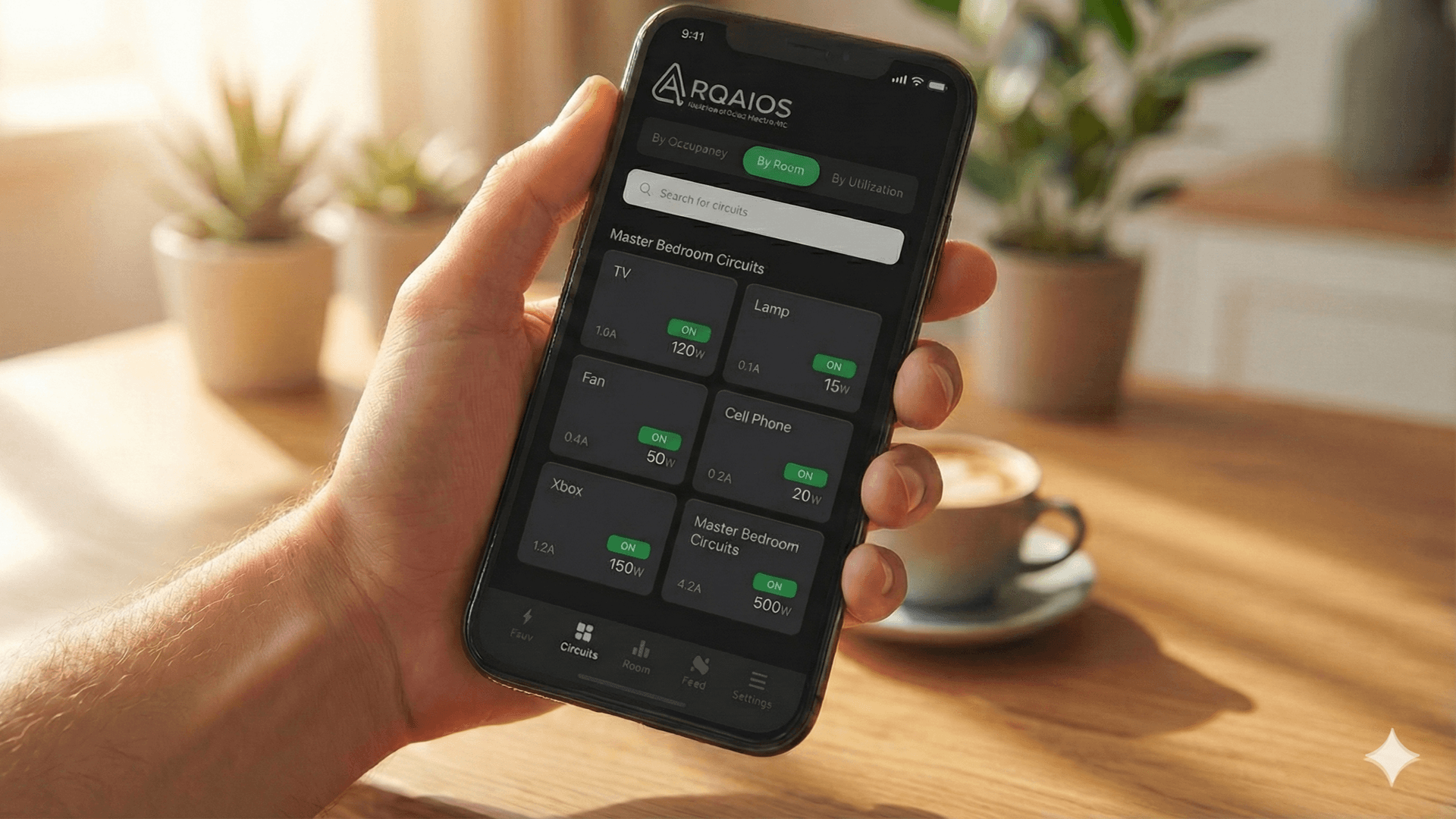
Intelligent outlets identify always-on 'vampire' loads and cut them when idle, dozens of watts per room, every hour of every day.
- 5
Extend backup power automatically
During an outage ALLIE sheds non-critical outlets, dims corridors to a safe minimum and relaxes HVAC in empty rooms so critical loads run longer.
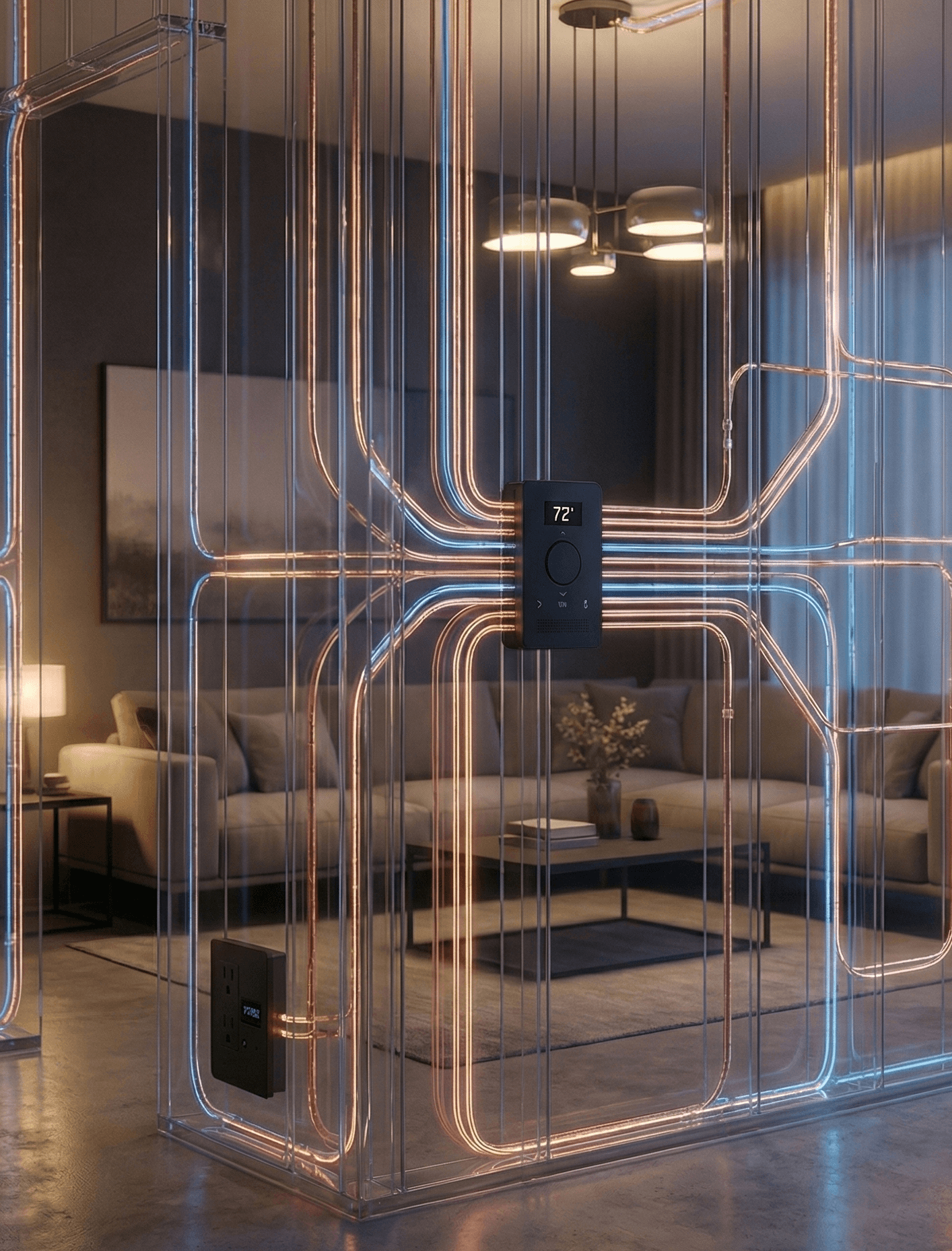
Automation, folded in
Automation that adapts to people, not the other way around.
Most building automation is rules-based and brittle. ALLIE learns routines over time and responds to real behavior, with manual override always one press away on the switch itself.
Presence-aware lighting
Adapted to occupancy and time of day; walk-in lighting, sleep-friendly night paths, away modes.
Comfort automation
Temperature and airflow tuned to how each room is actually used.
Adaptive routines
Learned patterns drive pre-conditioning and off-peak load shaping.
Cross-room coordination
Spaces hand off to each other as people move through a unit or a floor.
Compare the sensing methods on the hotels page, read how energy moves to the edge in Advancing the energy transition at the edge, or see the ALLIE product overview.
Safety earns the fixture its place in the room. Energy is what it does every hour after that. Same hardware, both outcomes.
Occupancy-based energy management
Energy capabilities, room by room.
Occupancy-aware HVAC
Room-level setback and recovery driven by real presence, not cards or clocks.
Intelligent vent control
Airflow directed to where people are; coordinated comfort at lower energy.
Smart load shedding
Prioritized shedding of non-critical loads to extend generator and battery runtime.
Presence-based lighting
Right level, right place, off when the room empties.
Standby waste elimination
Outlets that cut idle loads and restore power instantly.
Usage insights
Room- and floor-level consumption and occupancy patterns for operators.
Peak & demand flexibility
Shape loads toward off-peak windows; ready for grid-interactive programs.
Retrofit-friendly
Standard boxes and openings, installed room by room on normal maintenance cycles.
Zero guest or resident effort
Nothing to learn, adjust or remember. It simply works around them.
In practice
Where the savings come from.
Senior living & memory care
In a community
- Resident rooms set back automatically during meals, activities and outings; comfortable again before return
- Common areas, therapy rooms and dining lit and conditioned only when in use
- Backup power stretched during outages while safety lighting and medical equipment stay on
- Consumption and occupancy insights by wing for operations and sustainability reporting
Hotels & extended stay
In a property
- Guest-room HVAC setback the moment a room is truly empty, and comfort restored before the guest is back
- No keycard slot to defeat, no door contact to misread a sleeping guest as an empty room
- Lighting and plug loads off in vacant rooms; live occupancy for housekeeping, so nobody knocks on an occupied door
- Portfolio-level visibility into room-hours conditioned for nobody
Questions
Energy optimization, answered.
How does occupancy-based energy control work in a hotel room?
ALLIE senses whether a guest is actually in the room with mmWave radar in the light switch, including a sleeping guest who has not moved. When the room is truly empty it relaxes heating and cooling, turns off lighting and cuts idle plug loads, and it restores comfort before the guest is back. No keycard slot to defeat and no motion sensor that gives up on a sleeping guest.
Why not use keycard switches or motion sensors?
Keycard energy switches are defeated by any card left in the slot. Passive infrared motion sensors cannot see a person who is still, so they read a sleeping guest or a reading resident as an empty room. Radar measures presence itself, so ALLIE is right in the cases those systems get wrong.
How much energy can occupancy-based control save?
ENERGY STAR reports that hotel rooms sit unoccupied for about 12 hours a day and that guest-room energy management can cut energy costs by 35 to 45 percent. Savings at a given property depend on climate, room mix and how the building is run, which is why Arqaios starts with a pilot floor and before-and-after data.
What does ALLIE do during a power outage?
ALLIE outlets shed non-critical loads, corridors dim to a safe minimum and HVAC relaxes in empty rooms, so generator or battery runtime goes to the loads that matter. This load-shedding behavior is part of U.S. Patent No. 12,282,307.
More in the full FAQ
Next step
Cut waste, improve comfort and extend resilience.
Bring a utility bill and a floor plan. We will show where the empty-room hours are hiding.