Privacy & Security
Privacy is the product, not a setting.
ALLIE is privacy-first presence sensing for senior living communities and hotels: 60 GHz mmWave radar in the room's own switch, outlet and vent, with acoustic sensing as an optional feature, resolves occupancy and movement, and on-device AI turns them into events, from a fall or distress in a resident's room to a hotel room that is occupied when it should be empty. No camera exists in any fixture, nothing is recorded, and what leaves the room is 'occupied' or 'fall detected', never footage.
Bedrooms, bathrooms and hotel rooms are the last places anyone wants a camera. ALLIE gives operators room-level awareness from fixtures that cannot see a face.
Why it matters
Cameras made monitoring possible. They also made it unacceptable.
Every operator faces the same trade-off: the more you can see, the less residents, guests and staff will accept. ALLIE removes the trade-off.
Cameras stall adoption
Families, residents and guests push back on lenses in private space, and regulators are increasingly on their side. Projects slow down or shrink to hallways.
Wearables get left on the nightstand
Pendants and watches are forgotten, refused or uncharged, most often by the very people at highest risk.
Security still needs eyes
Doors that open at 3 a.m., a memory-care resident leaving a wing, someone in a back-of-house area who shouldn't be there: you need to know, and you need to know without recording everyone else.
How presence sensing works without a camera
Room-level awareness with nothing to look at.
ALLIE's privacy architecture is not a policy layered on top of a camera system. It is how the hardware works.
- 1
Sense with radar
mmWave radar in the switch measures reflections from people and objects: position, motion and posture. Breathing sensing and acoustic event sensing are optional features the operator enables per deployment; when acoustic sensing is on, it recognizes event signatures such as a fall or breaking glass.
- 2
Interpret inside the fixture
On-device models classify what is happening in the room. Raw signals are consumed at the edge and are not what gets transmitted.
- 3
Emit events, not streams
Only structured events and aggregate occupancy leave the room, over encrypted links, to the systems and people you designate.
- 4
Flag what shouldn't be happening
Context such as time of day, zone and routine turns presence into meaning: unauthorized entry, an exit-seeking resident, a room occupied when it should be empty.
- 5
Respond without surveillance
Alerts route by severity to staff, front desk or security; lighting and audible deterrents can respond automatically; incident summaries describe the event, not the people.
Data principles
What we collect, where it goes, and what we refuse to build.
Written for the person who has to sign off on it.
Presence, not identity
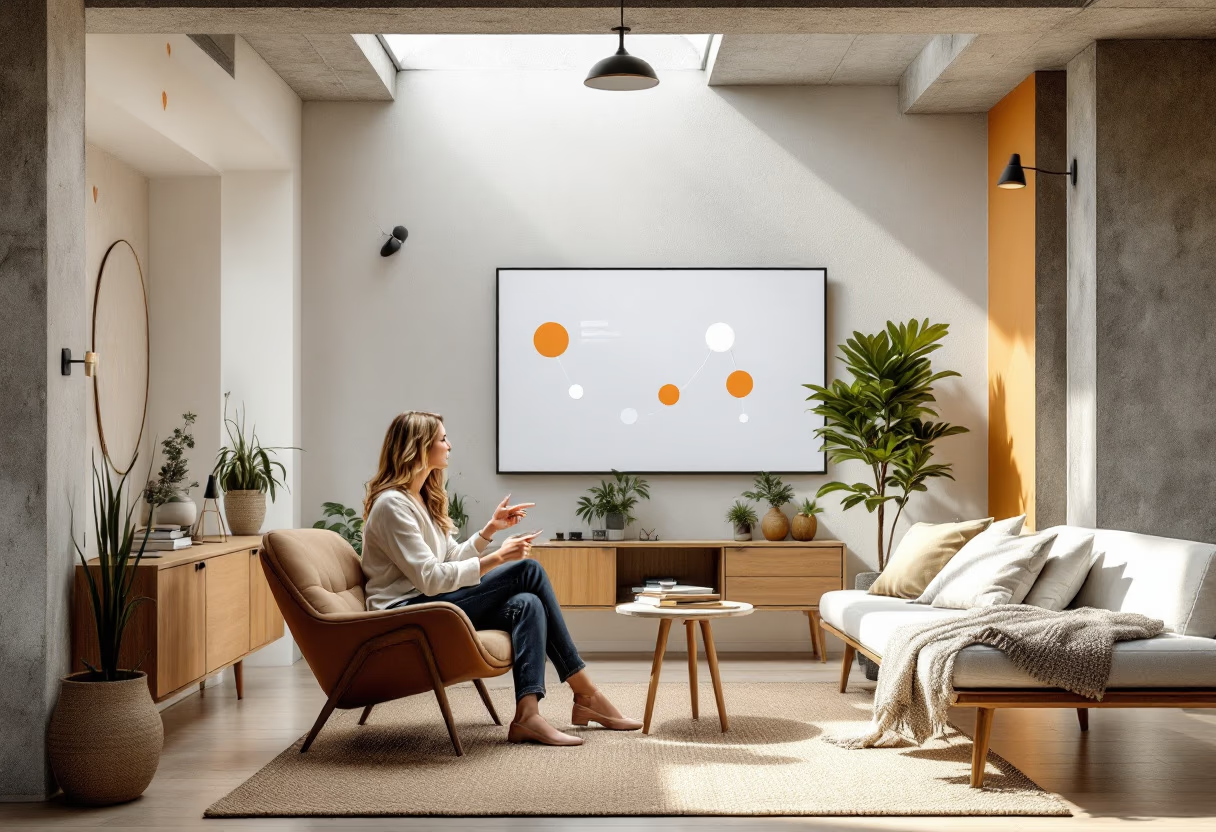
Radar resolves that a person is in the room and how they are moving. It does not capture faces, skin or anything a human could recognize.
Processed in the fixture
Signals are interpreted on the device. What leaves the room is an event such as 'occupied', 'fall detected' or 'entry after hours', not a stream.
Events, not recordings
There is no video to store, leak or subpoena. Acoustic sensing, an optional feature the operator enables per deployment, listens for the sound of an event, not for words.
Encrypted and scoped
Traffic between fixtures and the operator dashboard is encrypted; access is role-based; retention is configurable per site.
Transparent to occupants
Notices, room signage and opt-out workflows are part of every deployment plan for guests, residents and families.
Built for your compliance program
Exportable audit trails and minimal data collection make it easier to answer privacy, security and regulatory questions.
How does radar compare with cameras and Wi-Fi sensing on what each can infer about a person? Read How should AI see in the real world? and the definitions of presence versus identity and event-based monitoring in the glossary.
“The question is not whether a building should know when someone has fallen. It is whether the building needs to watch them to know. It doesn't.”
After-hours intrusion detection
Volumetric sensing that ignores the cat and flags the intruder.
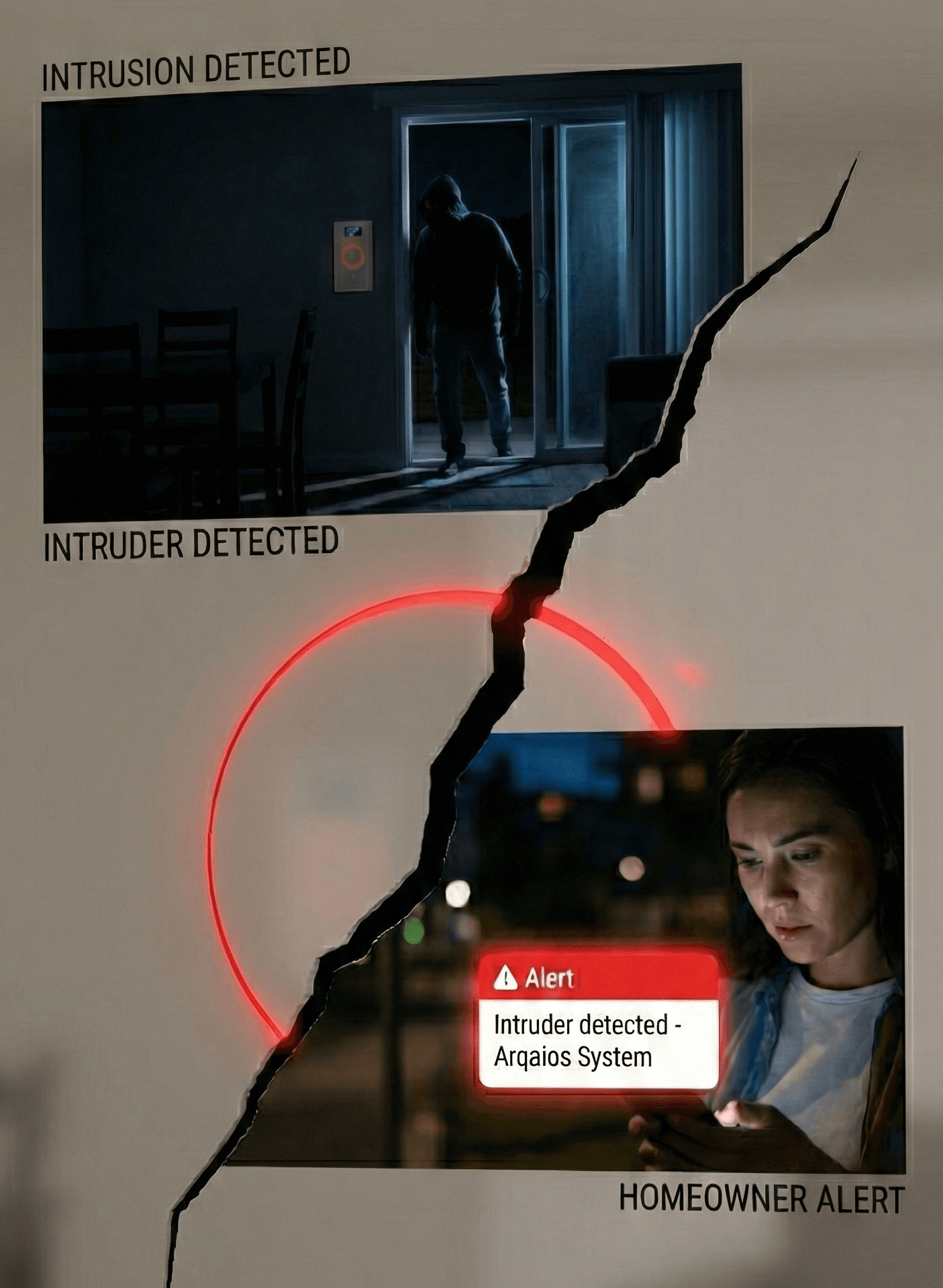
The same fixtures that watch over residents, and tell a hotel which rooms are occupied, protect the property when it should be empty, without adding a camera to a single room.
Unauthorized entry
Presence in a room, wing or back-of-house zone outside its schedule, with room-level location.
Exit-seeking & wandering
A memory-care resident leaving a unit at night triggers staff before the door, not after.
Smart routing & deterrence
Alerts by threat level to staff or security; lights and audible responses can act automatically.
Fewer false alarms
Context-aware detection distinguishes people from pets, HVAC drafts and shadows, so a page means something.
Privacy and security capabilities
Camera-free by design, secure by default.
Camera-free by design
No image sensor exists in the product. There is nothing to cover, disable or audit.
Presence & motion awareness
Occupancy, position, movement patterns and posture from mmWave radar.
Edge processing
Classification happens in the fixture; raw signals stay in the room.
Encrypted, role-based access
Encrypted transport, scoped permissions and configurable retention.
Intrusion & wandering detection
Zone- and schedule-aware alerts for entry, exit-seeking and after-hours presence.
Event-based incident records
Timestamped, room-located summaries suitable for review, with no footage attached.
In practice
What privacy-first looks like on a floor plan.
Senior living & memory care
In a community
- Resident rooms and bathrooms covered for falls and distress with no camera in private space
- Night-time exit-seeking alerts for memory-care wings before a resident reaches an exterior door
- Family-facing transparency: what is sensed, what is stored, who can see it
- Event logs that support incident review without recording residents' lives
Hotels & extended stay
In a property
- A written guest-privacy commitment: no cameras or audio recording in guest rooms, ever; occupied or not occupied is the only information the property and Arqaios need
- Occupancy for energy and housekeeping without keycards or door sensors
- Housekeeping knows a room is occupied before anyone knocks, so guests are not walked in on
- After-hours occupancy in back-of-house, storage and restricted floors, and unsold rooms that become occupied, visible to security
Questions
Privacy and security, answered.
What does privacy-first presence sensing mean?
It means the sensing cannot see a face. ALLIE resolves presence, position, motion and posture from mmWave radar reflections and event signatures from sound, and it interprets them inside the fixture. What leaves the room is an event such as 'occupied' or 'fall detected', never video, audio or a stream.
Is there any camera or microphone recording in an ALLIE room?
No camera exists in any ALLIE fixture. Acoustic sensing is an optional feature the operator enables per deployment; when it is on, it listens for the signature of an event such as a fall or breaking glass and processes it on the device, and it never records or streams audio.
What data does the operator receive and keep?
Structured events with a room, a time, a severity and a status, plus aggregate occupancy for energy and operations. Transport is encrypted, access is role-based and retention is configurable per site, so the operator decides who can see what and for how long.
Can ALLIE detect an intruder without recording everyone else?
Yes. Context such as time of day, zone and routine turns presence into meaning: someone in a back-of-house area after hours, a window being tampered with or an exit-seeking resident at night. The alert describes the event, not the people.
More in the full FAQ
Next step
Bring privacy questions. We built for them.
Walk us through your compliance requirements and your floor plan; we will show exactly what ALLIE senses, stores and sends.