
Technology
The fixtures were already in every room. We taught them to pay attention.
ALLIE is a fixture-native sensing platform: 60 GHz mmWave radar, environmental sensors and on-device AI built into standard light switches, power outlets and HVAC vents, with acoustic sensing and physiological sensing as optional features the operator enables per deployment. The radar resolves presence, position and posture through the whole room; the AI classifies falls, distress and occupancy inside the fixture; and only events leave the room. No camera is involved at any point.
It senses, understands and acts in the room, for fall detection and presence sensing in senior living and occupancy-based energy control in hotels, and never needs a lens to do it.
The platform
Three fixtures. One nervous system for the room.
Each ALLIE fixture senses and communicates. Together they cover a room from wall to ceiling, coordinate with each other, and report to the people and systems that run the building.
The room's senses
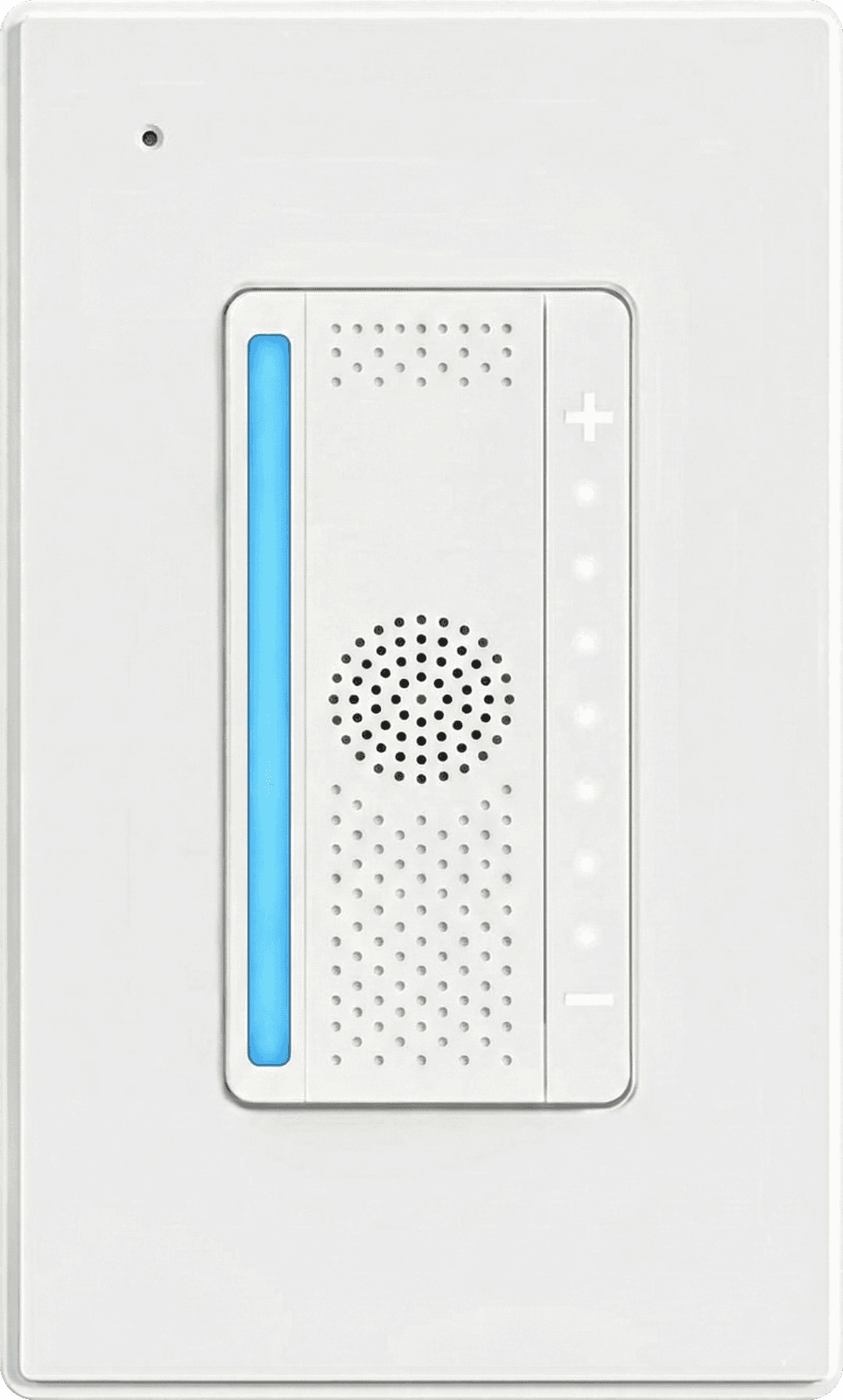
ALLIE Switch
Replaces the standard wall switch. Houses the 60 GHz mmWave radar for presence, motion and posture, environmental sensors and the room's edge processor, plus optional physiological motion sensing and acoustic event sensing that the operator enables per deployment. Local temperature control and a physical override stay on the wall where people expect them.
- Presence & fall detection
- Lighting and HVAC control
- Room-level edge AI
Power that pays attention
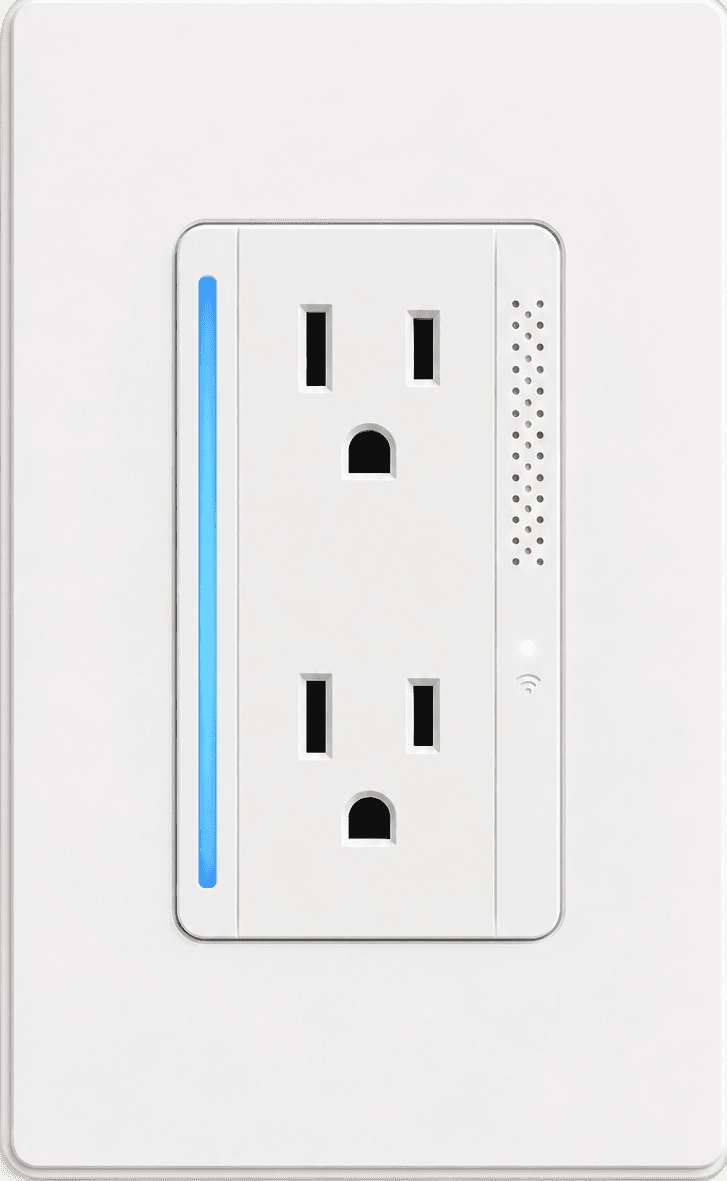
ALLIE Outlet
Replaces the standard receptacle. Monitors power parameters per outlet, detects motion, and manages loads, cutting idle draw, restoring power on presence and shedding non-critical loads to extend backup runtime. The subject of U.S. Patent No. 12,282,307.
- Plug-load sensing & control
- Standby-waste elimination
- Backup-power management
Comfort, directed
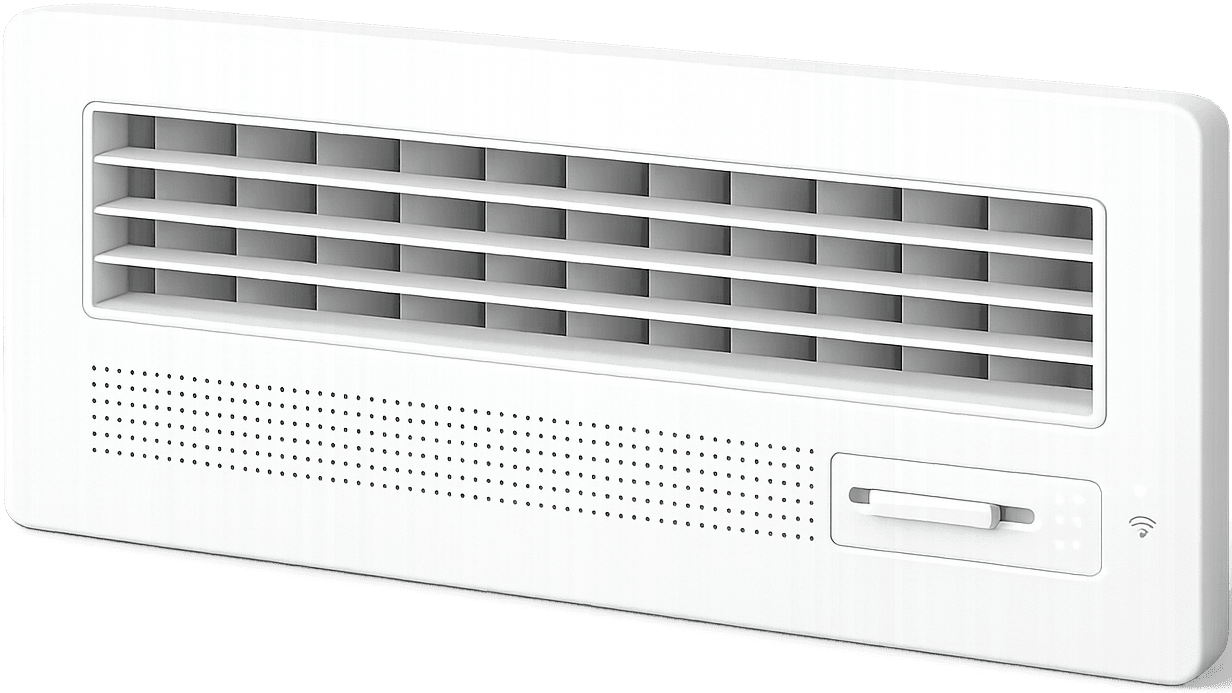
ALLIE Vent
Fits the existing supply opening. Coordinates with the switch to direct airflow where people are, relax conditioning where they are not, and support room-level HVAC strategies without touching the central plant.
- Room-level airflow control
- Coordinated setback & recovery
- Comfort at lower energy
How ALLIE works
The building already has switches, outlets and vents in every room. We made them pay attention.
Fixture-native means the sensing, the intelligence and the action all live in hardware that has to be there anyway, so a retrofit is a swap, not a project.
- 1
Sense in the fixture
mmWave radar and environmental sensors sit inside standard switches, outlets and vents, the hardware every room already needs, with acoustic sensing as an optional feature. No hub in the room, nothing to charge, nothing pointed at anyone.
- 2
Understand at the edge
On-device AI turns raw signals into meaning in the room itself: occupied or empty, how someone is moving, whether they have fallen and, where the operator has enabled optional physiological sensing, whether breathing and motion look normal. Raw data never has to leave.
- 3
Act in the building
Events flow to the people and systems that need them (caregivers, front desk, security, HVAC and lighting) with room-level location, severity and escalation timers. Comfort follows occupancy automatically.
Sensing & intelligence
What is inside an ALLIE fixture, and why it matters.
60 GHz mmWave radar
Radio-frequency sensing in the 60 GHz band resolves position, motion and posture to a few centimeters, through the whole room, in the dark, with no image. Physiological motion such as breathing is an optional feature the operator enables per deployment.
Acoustic event sensing (optional)
An optional feature the operator enables per deployment. When it is on, it recognizes the signature of events such as a fall, breaking glass or a call for help, and processes them on the device rather than recording audio.
Environmental sensing
Temperature and ambient conditions inform comfort automation and energy strategies room by room.
Edge AI
Models run in the fixture: presence, activity, fall and distress classification happen locally, so raw data does not need to leave the room.
Fixture-to-fixture coordination
Switches, outlets and vents share context to coordinate lighting, power and airflow and to deliver richer, better-located alerts.
Standard form factors
Installs in standard boxes and openings on normal power. Retrofits are a swap, not a construction project.
Operator view
Events, trends and occupancy, for the people running the building.
Staff see what matters: who needs help and where, which rooms are occupied, how risk and energy are trending. Alerts route by severity and escalate on timers; occupancy feeds building systems. Everything is event-based, so there is never footage to review.
Real-time alerts
Room, zone, severity and status, with escalation tiers.
Occupancy & vacancy
Live room status for care, housekeeping and energy.
Risk & activity trends
Per-room patterns that inform care plans and operations.
Integrations
Designed to work alongside nurse-call, BMS/HVAC, PMS and security workflows.
Integration paths are described on the ALLIE product page. For how radar compares with cameras and Wi-Fi sensing, read How should AI see in the real world?
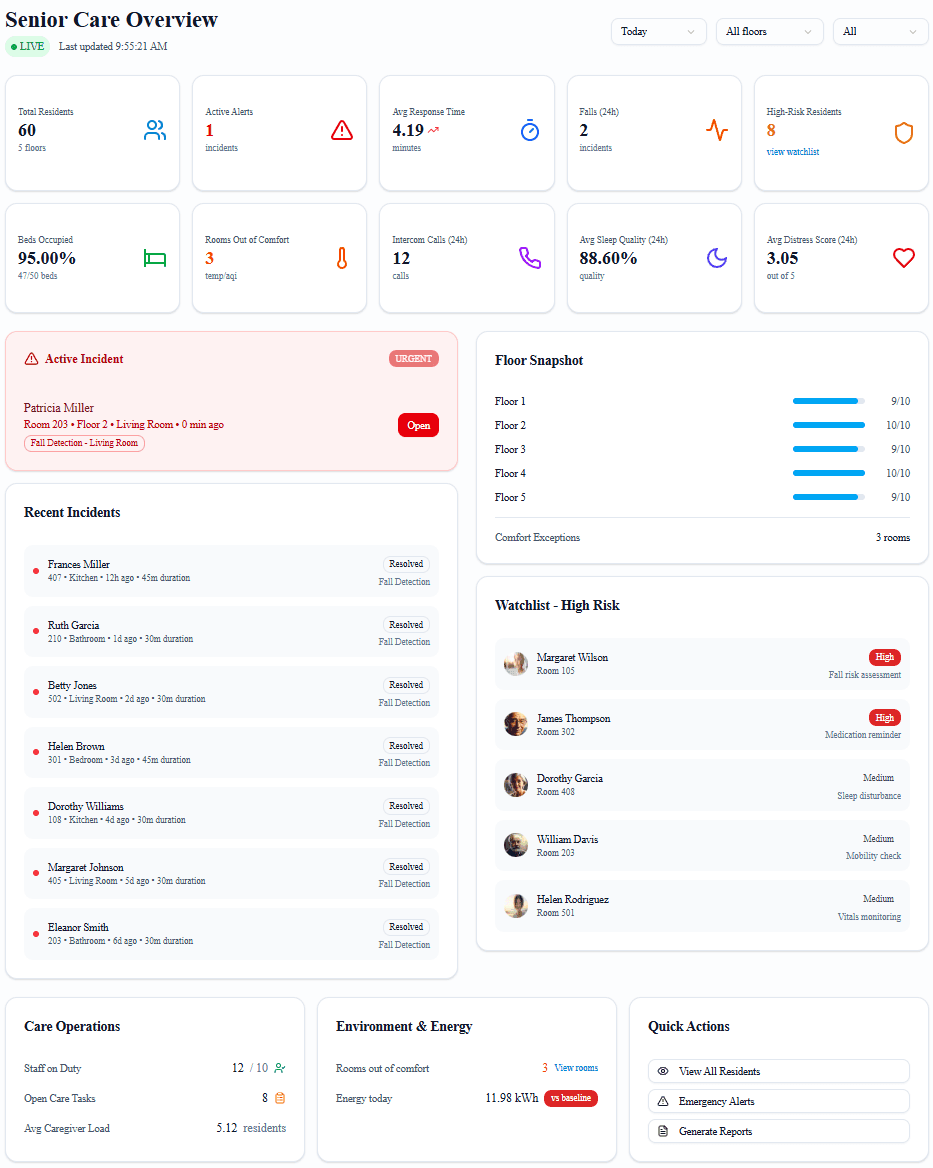
Fixture-native is the whole idea: the sensing, the intelligence and the action live in hardware every room already has to have. That is what makes it private, affordable and possible at scale.
Questions
How the technology works, answered.
What sensors are inside an ALLIE fixture?
60 GHz mmWave radar for presence, position, motion and posture, and ambient light and environmental sensors for night-time navigation and HVAC control. Physiological motion sensing such as breathing, and acoustic event sensing for sounds such as a fall or a call for help, are optional features the operator enables per deployment. An edge processor in the fixture runs the AI models.
What is fixture-native sensing?
Sensing, intelligence and action built into hardware every room already has to have: the light switch, the power outlet and the HVAC vent. Because the hardware has to be there anyway, a retrofit is a swap, coverage is room by room, and nothing new is pointed at anyone.
Why mmWave radar instead of cameras or Wi-Fi sensing?
Radar at 60 GHz resolves position and motion to a few centimeters, works in the dark and through the whole room, and produces a point cloud rather than an image, so it cannot capture a face. Wi-Fi sensing infers activity from signal disturbance with far coarser resolution and can reach through walls; cameras capture everything.
What runs in the fixture and what runs in the cloud?
Presence, activity, fall and distress classification run in the fixture. The operator dashboard receives events, trends and occupancy over encrypted links. Raw sensor data does not need to leave the room.
Definitions of the terms used here are in the glossary
Next step
Talk to the engineers.
Technical briefings cover sensing performance, data flows, integration paths and installation, with the people who designed it.