Fall Prevention & Detection
From fall prevention to fall detection, built into every room.
ALLIE fall detection is a camera-free system for assisted living, memory care and independent living. mmWave radar built into the room's light switch, outlet and vent, with acoustic sensing as an optional feature the community enables per deployment, recognizes a fall in seconds, process it on the device, and send an alert with room, severity and status to staff. No video, no wearable, no recording leaves the room.
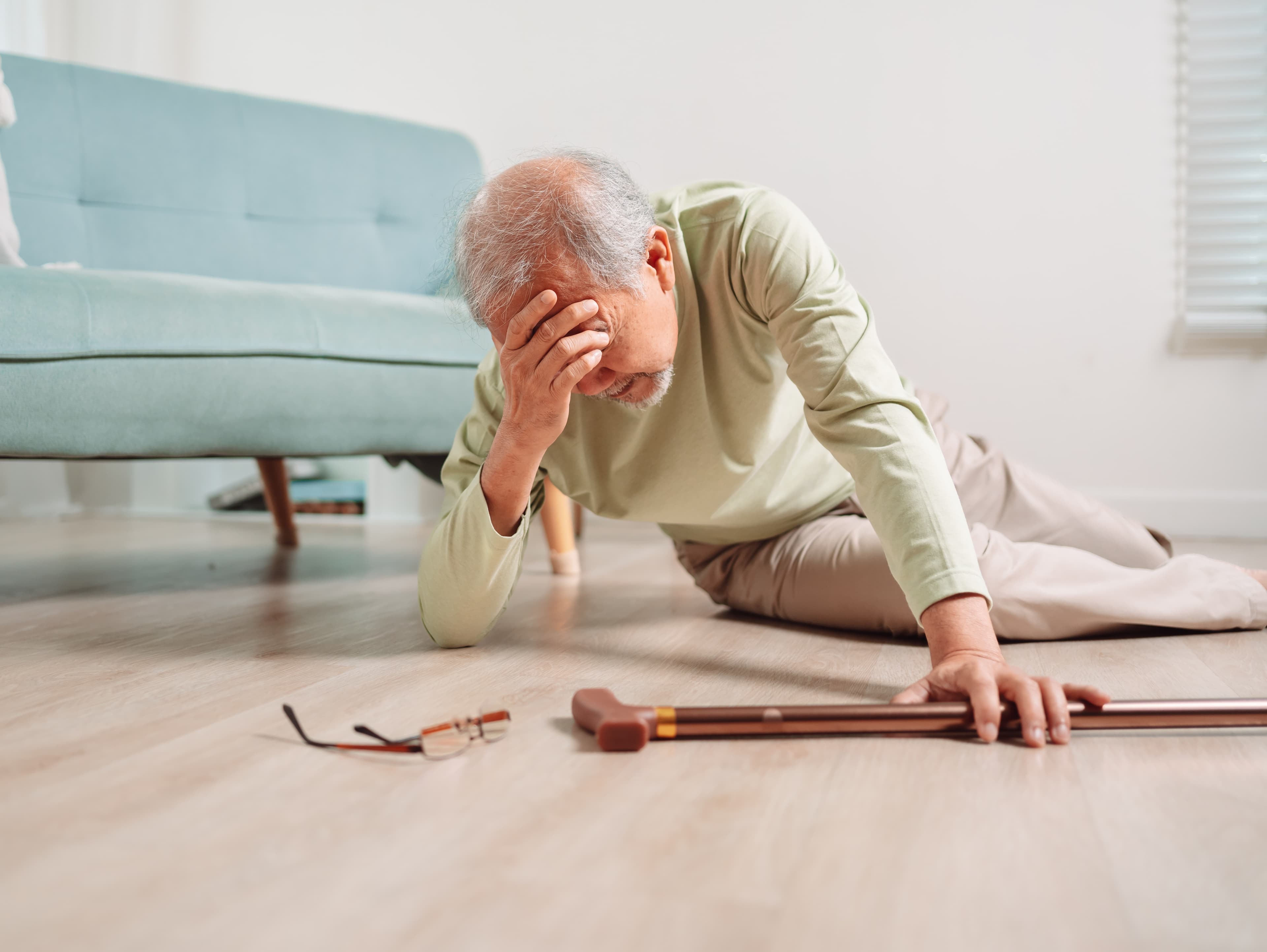
ALLIE reduces the risk and shortens the response with privacy-first sensing embedded in fixtures the room already has. No cameras. No pendants. No one lying on a bathroom floor waiting to be found.
Why it matters
Most falls announce themselves. Most systems only hear the crash.
The gap between a fall and a response is where outcomes are decided, and it is widest at night, in bathrooms, behind closed doors.
Risk shows up first as a pattern
Slower transfers, more night-time bathroom trips, an unsteady gait, a change in routine. These precede falls by days or weeks and are invisible to a pendant.
Wearables fail the people who need them most
Pendants are forgotten, refused, taken off in the shower or uncharged. Cognitive decline makes every one of those failures more likely.
Time on the floor is the injury multiplier
The longer someone lies unfound, the worse the outcome: dehydration, pressure injury, pneumonia, fear of moving again. Detection has to be automatic.
By the numbers
Falls are the leading cause of injury for older adults.
emergency department visits a year from older-adult falls
fall-related hospitalizations among older adults each year
How mmWave radar detects a fall
Notice the drift. Light the path. Catch the fall. Escalate until someone answers.
A single install covers the whole arc of prevention, detection and response, because the same fixtures are already in every room. Radar resolves position and posture through the whole room; optional acoustic sensing, where the community enables it, hears the impact or the call for help; the fixture decides in seconds.
- 1
Establish a baseline
ALLIE learns each room's normal: movement patterns, daily routine, how long the bathroom visit usually takes, what a typical night looks like.
- 2
Detect risk early
Instability, unusual gait, longer transfers and new night-time wandering patterns surface as risk signals to care teams, before the incident, not after.
- 3
Prevent proactively
Lighting guidance switches on for night-time paths; caregivers get a heads-up when a high-risk resident is up and moving.
- 4
Detect the fall in real time
Multi-sensor signals identify a fall event as it happens, with the room, the zone and whether the person got back up.
- 5
Escalate by severity
Alerts route to the right people with configurable no-response timers, so a fall never waits for the next scheduled check.
Live demo
Watch ALLIE's fall detection model work, live.
Slow falls and false alarms are two of the hard problems in fall detection. In this 1:45 demo, Dyuti Dasary, AI/ML Pipeline Engineer at Arqaios, runs the model live: data from the fixtures goes in, no cameras are involved, and she performs a fast fall, a very slow fall and a fall followed by a quick recovery.
In the demo
- 0:04Dyuti introduces the model: data from the fixtures goes in, fall detection comes out.
- 0:46A fast fall, detected.
- 0:56A very slow fall, detected.
- 1:25A fall followed by a quick recovery on her feet.
Response
Room, severity and status, in the first message.
A useful alert answers three questions before anyone starts walking: where, how bad, and are they up. ALLIE answers all three and keeps updating while help is on the way.
Location to the room and zone
Bathroom vs bedside vs doorway, not just 'apartment 214'.
Severity context
Impact signature, time on the floor and post-fall movement.
No-response timers
Escalate to the next tier automatically if no one acknowledges.
Works with your workflow
Designed to sit alongside nurse-call, paging and mobile alerting you already run.
Dignity preserved. Safety assured. A resident should never have to choose between privacy in their own bathroom and someone knowing when they need help.
Fall detection without cameras or wearables
What ALLIE does, from risk to response.
Fall-risk patterning
Gait, transfer and routine changes surface as early warnings for care planning.
Night-time safety automation
Path lighting and caregiver heads-ups when high-risk residents are up at night.
Real-time fall detection
Multi-sensor detection with room and zone location, in seconds.
Post-fall status
Did they get up? Are they moving? Motion context accompanies the alert, with breathing context where the community has enabled optional physiological sensing.
Configurable escalation
Tiers, timers and channels tuned to each community's staffing model.
Dignity-first design
Nothing to wear, nothing pointed at anyone, nothing that looks like medical equipment.

Prevention is the point
The best fall alert is the one that never has to be sent.
Communities use ALLIE's risk signals to adjust care plans, schedule PT, move a resident closer to the nurses' station or simply check in more often. Detection is the safety net; prevention is the goal.
Why radar rather than a camera or a pendant? Read how AI should see in the real world, see what is inside an ALLIE fixture, or start with ALLIE in plain facts.
In practice
Where it lives, and what changes.
Senior living & memory care
In a community
- Every resident room and bathroom covered, including memory care where pendants are not an option
- Night-shift staff see who is up and where, instead of walking every hall on a schedule
- Risk trends feed care conferences and family updates with evidence, not anecdotes
- Incident timelines with location and response times for quality and liability review
Questions
Fall detection, answered.
How does camera-free fall detection work?
ALLIE fall detection uses 60 GHz mmWave radar built into the room's light switch, outlet and vent, with acoustic sensing as an optional feature the community enables per deployment. Radar resolves a person's position, motion and posture; when acoustic sensing is on, it recognizes the sound of an impact or a call for help. On-device AI classifies the fall in seconds and sends an alert with the room, the severity and whether the person got up. No camera, no image, no wearable.
Does fall detection work in the bathroom and at night?
Yes. Radar senses through the whole room in the dark, including the bathroom floor a pendant never reports from, and the bathroom is where most falls behind a closed door happen. There is no image sensor, so private spaces are covered without anyone being watched.
What happens after a fall is detected?
The alert goes to the people the operator designates with the room and zone, a severity read and post-fall status. If nobody acknowledges it, configurable no-response timers escalate to the next tier automatically, so a fall never waits for the next scheduled check.
Can ALLIE help prevent falls, not just detect them?
Yes. ALLIE learns each room's normal patterns and surfaces changes such as unsteady gait, longer transfers and new night-time bathroom trips as risk signals for care planning. It can also switch on path lighting when a high-risk resident gets up at night.
Is ALLIE a medical device?
No. ALLIE is a building safety and energy platform. It uses movement and physiological motion for presence, activity and distress detection and does not diagnose medical conditions.
What are the alternatives to wearable fall detection in assisted living?
The three primary alternatives to wearable fall detection pendants are optical cameras, floor pressure mats, and fixture-native mmWave radar sensors. Wearable pendants suffer from severe compliance failure: over 80 percent of nighttime falls occur without pendants worn, and injured residents often cannot press a button. Optical cameras raise intense privacy and dignity objections in private bathrooms and bedrooms. mmWave radar embedded in standard wall switches provides 100 percent passive, camera-free fall detection that operates in complete darkness and steamy showers with zero resident friction.
How does mmWave fall detection compare to vision-based cameras?
mmWave fall detection uses 60 GHz radio waves rather than optical lenses. Radar resolves spatial position, velocity vectors, and posture as an anonymous point cloud, distinguishing between a sudden fall and normal sitting or lying down without capturing images, facial identity, or skin. It works reliably in complete darkness, behind closed shower doors, and in humid environments where optical lenses fog or fail.
More in the full FAQ
Next step
Prevent more falls. Respond faster. Protect independence.
Tell us about your community or property and we will map coverage room by room.